Trolley Jack and Axle Stands
Image illustrative (photo de stock) ; ce n'est pas le produit exact.
The Rule That Matters Most
A hydraulic jack lifts a car. It is not designed to hold one, and hydraulic seals fail, valves leak and jacks slip off lifting points.
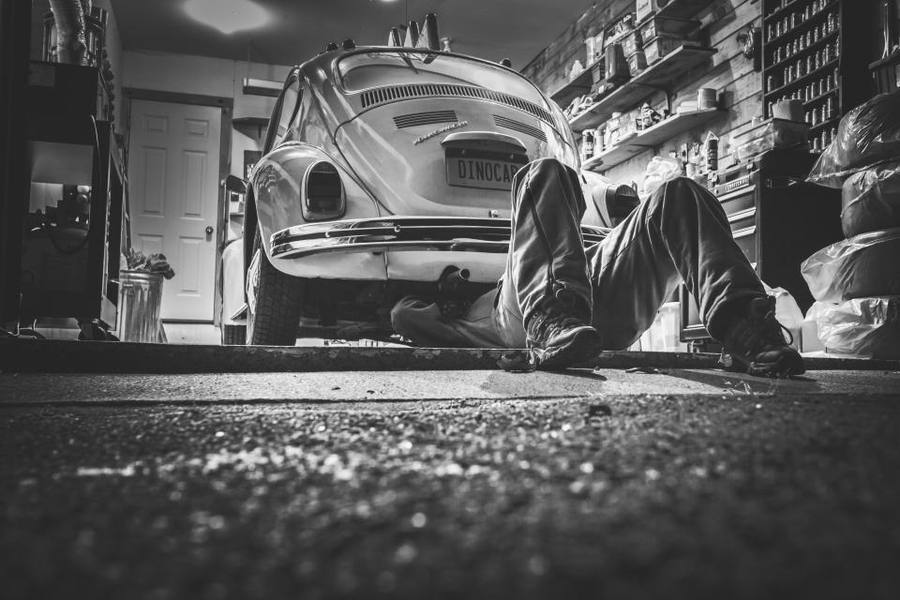
Nobody should ever be under a vehicle supported only by a jack. This is not caution — people are killed this way regularly, and it happens quickly and silently.
Axle stands take the load, the jack is lowered onto them, and only then does anything go underneath. That sequence is not negotiable.
Correct Lifting Points
Vehicles have designated jacking points, reinforced to take the load, and they are in the owner handbook.
Lifting on a sill, a floor pan or a suspension component not designed for it bends bodywork or damages components, and on a unibody car the damage is expensive.
Axle stand placement has its own designated points, which are often different from the jacking points, and using the wrong place can crush a sill or bend a subframe.
Surface Matters
A trolley jack needs a hard level surface, since the wheels must roll as the car rises — a jack that cannot roll will drag the lifting point sideways.
Tarmac softens in heat and axle stands can sink into it, and gravel and grass are entirely unsuitable regardless of how level they look.
Concrete is the correct surface, and if that is not available the job should wait rather than being attempted on something soft.
Chocks And Handbrakes
The wheels remaining on the ground must be chocked, and the handbrake applied where it acts on wheels still down.
A car in gear or park adds resistance and neither is a substitute for chocks, and a car on stands can roll off them with very little force.
Chocking both directions on the grounded wheels is the correct approach rather than just behind them.
Capacity And The Shake Test
Jack and stand capacities should comfortably exceed the load, remembering that lifting one corner carries considerably less than the full vehicle weight but still demands margin.
Stands must be used in pairs at matched height with pins properly engaged, and a stand with a worn or bent pin should be retired.
Shaking the car firmly before going underneath confirms everything is stable, and anything that shifts means starting again rather than proceeding carefully.
A spare wheel or a removed road wheel laid flat under the sill as a secondary backstop is a habit worth adopting whenever a car is on stands for any length of time. It costs nothing, takes seconds, and means that even in the extremely unlikely event of a stand failing there is something solid between the car and the ground. Professional workshops use similar redundancy for the same reason, and the wheel is already off the car anyway.
The Verdict
Essential equipment for home mechanical work, where the stands rather than the jack are the safety-critical component.
Surfaces must be solid and level, lifting points are specified for reasons, and capacity needs real margin.
Never go under a car held only by a jack. Stands take the load, the jack comes down onto them, then you go underneath.
En un coup d'œil
Avantages
- Enables home mechanical work safely
- Trolley jacks lift faster and more stably than scissor jacks
- Stands hold indefinitely where a jack cannot
- Pairs allow a whole axle or corner to be worked on
Inconvénients
- Fatal if stands are omitted
- Needs a hard level surface such as concrete
- Wrong lifting points damage bodywork expensively
- Heavy and bulky to store
Questions fréquemment posées
Can I work under a car on a jack?
No. Hydraulic seals fail, valves leak and jacks slip, and people are killed this way regularly — quickly and silently. Axle stands take the load, the jack is lowered onto them, and only then does anything go underneath.
Where do I put the jack?
The designated jacking points listed in the owner handbook, which are reinforced for the load. Lifting on a sill, floor pan or the wrong suspension component bends bodywork, and on a unibody car that damage is expensive.
Does the surface matter?
A great deal. A trolley jack needs to roll as the car rises, so it needs hard level ground. Tarmac softens in heat and stands sink into it, and gravel and grass are unsuitable. If concrete is not available, wait.
Spécifications
| Jack | Lifts only; never supports |
| Stands | Take the load before anyone goes underneath |
| Lifting points | As specified in the owner handbook |
| Surface | Hard and level; concrete preferred |
| Never on | Gravel, grass or soft tarmac |
| Chocks | Both directions on grounded wheels |
| Stands | Used in pairs at matched height |
| Final check | Shake the car firmly before going under |
Résumé
Stands are the safety-critical part, not the jack. Never go under a car held only by a jack — people die that way regularly.
Vérifier le prix sur Amazon